
Rapid Tooling
What is Rapid Tooling?
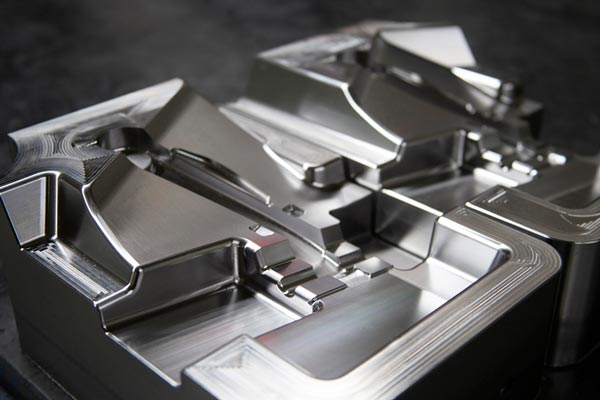
Rapid tooling is the group of techniques used to fabricate tooling fast, at low cost, and efficiently for traditional manufacturing processes to create parts on a slim timeline or in lower quantities.
Conventional tooling is most commonly produced out of durable metals using technologies such as machining and metal casting. However, these processes are expensive and better suited for large-scale production cycles. When used for tooling iterations or to produce tooling that would be used to manufacture only small batches of parts, costs rise and production timelines extend dramatically.
Incorporating rapid tooling into the product development process enables manufacturers to validate design and material choices prior to transitioning to mass production to accelerate product development, iterate quickly, and bring better products to market. Rapid tooling empowers engineers to use the actual production-grade materials to evaluate how the parts will perform in real-world applications and produce limited volumes of products for beta and validation testing. Rapid tooling can also help troubleshoot the manufacturing process before investing in expensive production tooling.
The difference between rapid tooling and Conventional Tooling
Rapid Tooling Conventional Tooling

Rapid Prototyping vs Rapid Tooling
Rapid prototyping is the group of techniques used to quickly fabricate a scale model of a physical part or assembly using three-dimensional computer-aided design (CAD) data. Because these parts or assemblies are usually constructed using additive fabrication techniques as opposed to traditional subtractive methods, the phrase has become synonymous with additive manufacturing and 3D printing.
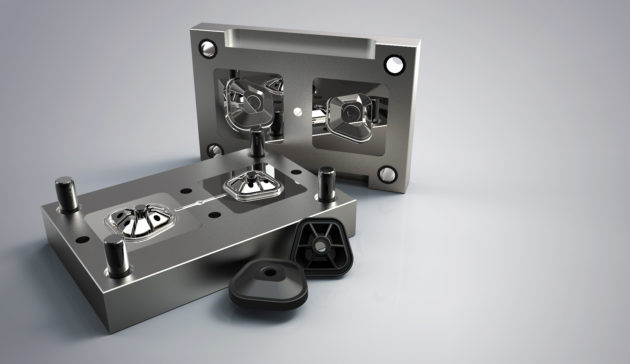
Rapid tooling uses additive manufacturing or machining processes to create not the parts directly, but tooling such as molds, dies, or patterns, which are then used in traditional manufacturing processes to produce the final parts, bridging the gap between (rapid) prototyping and production, and enabling the manufacturing of end-use parts.
For entrepreneurs or small business looking to get their ideas on the market fast, Rapid Tooling and Rapid Prototyping are particularly the best and quickest way for new product development in comparison to conventional manufacturing method.
Advantages of Rapid Tooling
- Speed
Rapid tooling significantly reduces the time required to produce the mold, enabling faster prototyping and production. - Cost-effectiveness
Rapid tooling tends to be more cost-effective compared to traditional tooling methods, especially for low to moderate volumes. - Complex Geometry
Well-suited for producing molds with complex geometries that can be challenging to produce using conventional methods. - Iterative Prototyping
Allows for rapid iteration and modification of the design during the prototyping phase. - Customization
Enables the creation of custom molds for specific applications and designs.
Applications of Rapid Tooling
Rapid tooling can be used to support a variety of traditional manufacturing processes to produce plastics, silicone or rubber parts, composites, and even metal parts.
Plastic parts fabrication:
- Injection Molding
- Thermoforming
- Casting
- Overmolding and insert molding
- Compression molding
Metal parts fabrication:
- Casting
- Sheet metal forming
Silicone or rubber parts fabrication:
- Injection molding
- Casting
- Compression molding
- Overmolding and insert molding
Composite parts fabrication:
- Thermoforming
- Compression molding
- Forming