
What are the factors that affect the design of thin-walled mold processing structure?
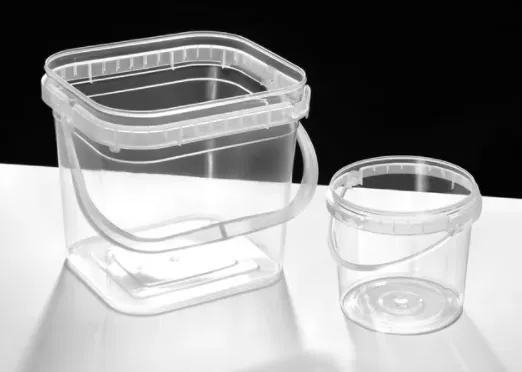
1. Reasonable wall thickness:
- The manufacturing process of thin-walled molds is very demanding, so the control of wall thickness is crucial.
- The ideal wall thickness is usually between 0.5mm~1.0mm. Excessive wall thickness increases the weight of the mold and reduces the quality of the product, while too small a wall thickness increases the risk of mold cracks and deformation.
- When designing, a reasonable wall thickness must be determined according to the needs of the product and the characteristics of the material.
2. Reasonable structure:
- The structural design of the mold needs to consider factors such as appearance modeling, process performance and cost.
- In order to ensure the appearance and accuracy of the product, the mold needs to have a complex structure, such as parting, cutting wire, pusher and slider.
- At the same time, in order to improve production efficiency, the structure of the mold also needs to be simplified as much as possible, and the various parts of the mold need to be reasonably laid out, so as to minimize the stress concentration and deformation, and improve the durability and stability of the mold.
3. Reasonable materials:
- The selection of mold material is also an important consideration in structural design.
- Thin-walled molds require materials with high hardness, high strength, high toughness, high wear resistance, high thermal conductivity and high corrosion resistance.
- Common mold materials include P20, H13, S7, etc., and the specific selection needs to be scientifically and reasonably selected according to the use of the product, the structure of the mold and the manufacturing process.
4. Cooling system design:
- The high-speed production of thin-walled product molds requires a good cooling system to ensure that the molds will not overheat and affect product quality.
- Reasonable cooling system design can effectively reduce manufacturing costs and prolong the life of molds and production equipment.
- The cooling method includes the cooling method of cooling channel cutting and spray cooling, and the appropriate cooling method needs to be selected according to the specific production requirements and process performance.
5. Avoid chamfers and sharp corners:
- Excessive chamfering will lead to the concentration of force on the mold, increasing the risk of mold cracks and deformation.
- The existence of sharp corners will aggravate the stress of the mold, making the mold prone to cracks and deformation.
- Therefore, the design must follow the principle of “the fewer chamfers, the better”, and optimize the structure to reduce the number and size of sharp corners as much as possible.
6. Strengthen structural stability:
- Thin-walled molds will encounter a variety of stresses, pressures and impact forces in the process of manufacturing and use, so they need to have strong structural stability.
- When designing, symmetrical structure, strengthening support, increasing beams and columns can be used to strengthen the stability of the mold.
7. Consider the coefficient of thermal expansion of the material:
- The thermal expansion coefficient of different materials is different, which will have an impact on the manufacture and use of thin-walled molds.
- The thermal expansion coefficient of the material needs to be considered in the design, and corresponding compensation measures should be taken to ensure the geometric dimensional stability of the mold at different temperatures.
To sum up, the factors influencing the structural design of thin-walled mold processing mainly include reasonable wall thickness, reasonable structure, reasonable materials, cooling system design, avoiding chamfering and sharp corners, strengthening structural stability, and considering the thermal expansion coefficient of materials. These elements need to be considered in the design process to ensure the performance and stability of the mold.
Categories
#
#
Featured Article
For more details, please visit our other website:Thin-wall molds