
How to extend the service life of thin-wall molds?
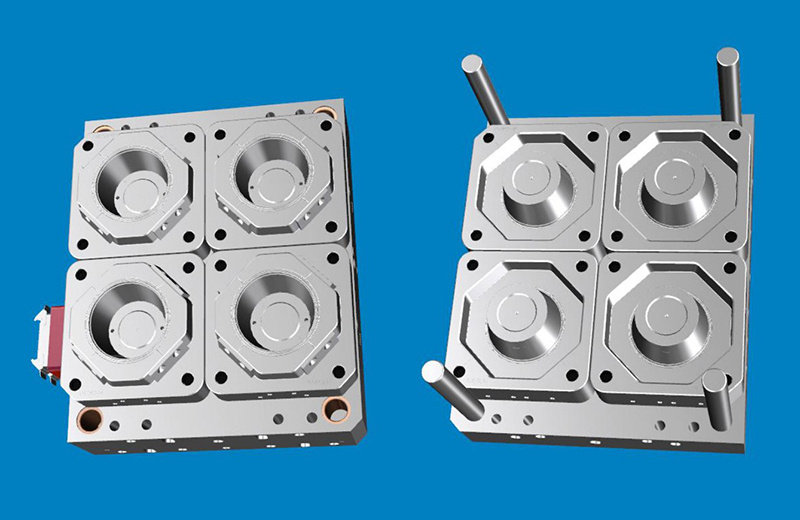
In order to extend the life of thin-wall molds, a variety of measures can be taken, including the use of high-quality mold materials, proper maintenance to prevent wear and tear, optimization of the molding process to reduce mold stress, and the implementation of appropriate cooling methods to control thermal expansion, regular inspections and repairs can also help identify and resolve potential problems before they lead to widespread damage, ultimately extending the life of the mold.
1. Reasonable selection of materials: According to the characteristics of the product and the use of the environment, choose wear-resistant and corrosion-resistant materials, such as high-speed steel, cemented carbide, hot work steel, etc.
2. Optimize design: Consider the load, stress distribution and wear during the design, and pay attention to the rationalization of the structure, avoid stress concentration, and improve the bearing capacity and service life of the mold.
3. Surface treatment: Oxidation, hardening, chrome plating and other surface treatment methods are used to improve the wear resistance and corrosion resistance of the mold, so as to prolong the service life.
4. Maintenance: Regularly inspect the mold, repair and find problems in time, and improve maintenance efficiency. Timely cleaning and lubrication to reduce corrosion and wear.
5. Control temperature: Too high temperature in the injection molding or casting process will damage the mold, and the temperature should be controlled within a reasonable range to avoid thermal fatigue, creep deformation and other problems.
6. Control material wear: Avoid using filler materials containing high hardness substances to reduce the cutting and friction of the inner wall of the cavity. Recycled material can also aggravate cavity wear and should be minimized.
7. Reduce the impact of external force: Thin-wall or special-shaped products will produce greater suction when injection, and a larger tensile force is required for demoulding, which may lead to fatigue cracking of the cavity. The impact of these impact forces on the mold should be minimized.
8. Anti-corrosion treatment: Chrome plating is currently the most widely used and most effective mold surface treatment technology. By generating a microscopic Cr2O3 oxide layer on the cavity wall, the wear resistance and corrosion resistance can be significantly improved, and the life can be prolonged.
9. Regular maintenance: After long-term use, the cavity will inevitably produce a certain degree of wear and deformation. In order to prolong the life, the cavity thinning can be compensated for by assembling a trimmer plunger. When the deformation exceeds the tolerance range, precision machining is required to restore the original accuracy of the mold. This is a repair and renewal of the mold, which can continue to extend its service life.
10. Control the cavity pressure: For thin-wall injection molds, the size of the cavity pressure is the first factor to pay attention to. The lack of technology in the injection molding machine manufacturer may lead to problems such as excessive mold load and a significant reduction in the service life of the machine. Therefore, we should pay attention to high-speed and low-voltage technology, without changing the product quality, increase the profit margin of the product, and reduce the maintenance cost in the later stage.
Categories
thin-wall molds
Featured Article
For more details, please visit our other website: thin-wall molds